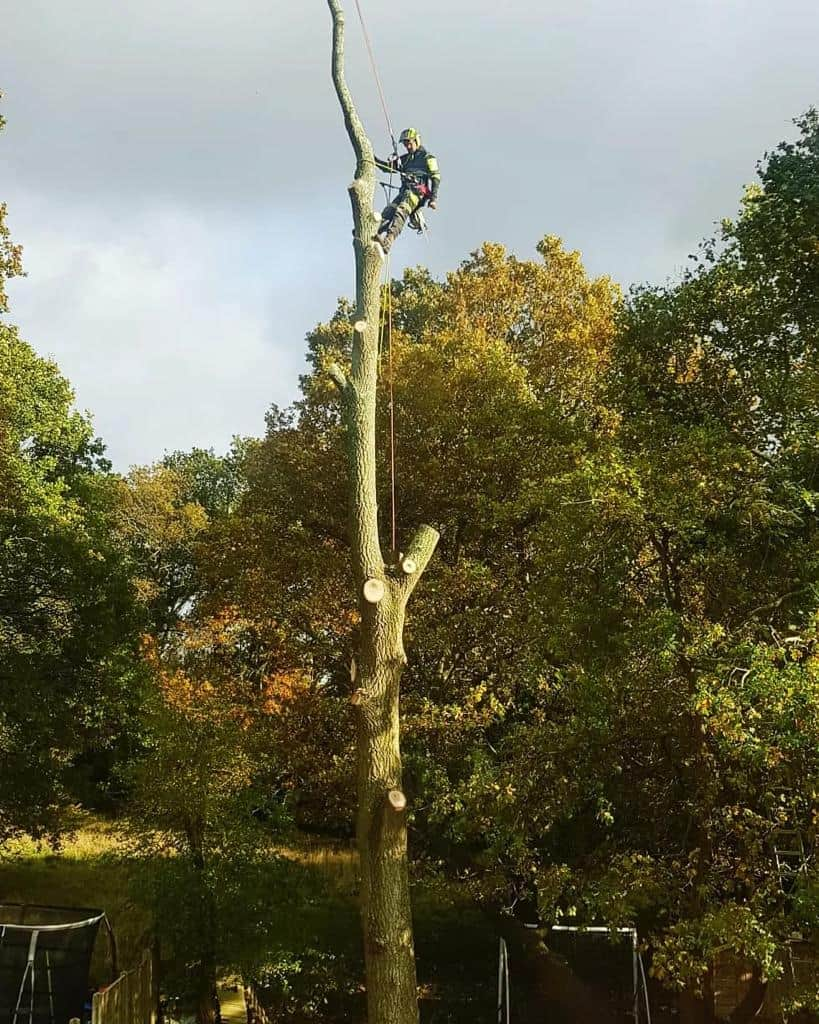
Tree felling is sometimes the only responsible option when a tree becomes unsafe or poses a risk to nearby people, property, or infrastructure. While many trees can be preserved through pruning, reduction, or disease management, certain hazards make removal unavoidable. Understanding these dangers helps homeowners act before a situation becomes more serious.
At Great Shelford Tree Surgeons in Great Shelford, Cambridge, we assess trees carefully to determine when felling is necessary for safety and long-term stability.
1. Severe Structural Weakness
When a tree develops significant internal or external structural failure, it may no longer be able to support its own weight. This often results from:
- Deep cracks or splits in the trunk
- Storm damage weakening key limbs
- Previous improper pruning
- Poor limb unions where branches attach at weak angles
A structurally compromised tree can fail suddenly, making felling the safest option.
2. Extensive Decay or Rot
Internal decay is one of the most common reasons for tree felling. Rot weakens the trunk and major limbs from the inside, often without outward signs until the damage becomes advanced.
Indicators include:
- Fungal growths at the base or on the trunk
- Cavities or hollow sections
- Crumbling wood
- Sections of bark shedding
Once decay reaches a critical stage, the tree can no longer be stabilised.
3. Dangerous Leaning
A slight lean is normal in many trees, but a sudden lean or one combined with ground movement is a sign of instability. This may be caused by:
- Root plate failure
- Soil erosion
- High winds
- Shallow or compromised roots
When a lean threatens nearby buildings, roads, gardens, or utility lines, tree felling is often the only practical solution.
4. Root Instability and Ground Movement
Roots anchor a tree and draw essential nutrients from the soil. When they become compromised, the tree’s entire structure is at risk.
Root problems may arise due to:
- Construction damage
- Compacted soil
- Root decay
- Persistent waterlogging
A weakened root system increases the likelihood of the tree failing at ground level.
5. Persistent or Spreading Disease
Some tree diseases spread rapidly and can weaken a tree beyond safe recovery. In other cases, the disease threatens nearby trees or garden plants, making removal the most responsible course of action.
Common signs include:
- Discolouration of foliage
- Dieback in multiple branches
- Patches of dead bark
- Abnormal growth patterns
Felling prevents further decline and protects the wider landscape.
6. Hazardous Proximity to Structures
When trees grow too close to buildings, fences, garages, or public spaces, the risks become more pronounced. Problems may include:
- Overhanging limbs that could fall
- Branches scraping roofs or walls
- Restricted access for maintenance
- Structural pressure from expanding trunks
If corrective pruning cannot resolve the danger, felling may be recommended.
7. Storm-Damaged Trees
High winds, heavy snowfall, and prolonged rainfall can all weaken trees. Storm damage may cause limbs to snap, trunks to split, or the entire tree to shift from its base.
Even if the tree remains standing, its stability may be too compromised to repair safely.
8. Dead or Dying Trees
Dead trees lose their structural strength over time, making them highly unpredictable. They can shed branches without warning or collapse entirely—especially during wet or windy weather.
Removing dead or severely declining trees is crucial in preventing injury or property damage.
Conclusion
Tree felling is often a last resort, but it is essential when safety is at risk. Structural weakness, disease, decay, storm damage, and root problems are among the most common hazards that make removal unavoidable. Understanding these dangers helps homeowners act quickly and responsibly.
If you are concerned about the condition of a tree on your property, Great Shelford Tree Surgeons in Great Shelford, Cambridge can help. Get in touch today to arrange a professional assessment and ensure your garden remains safe and well-managed.
Call us on: 01223 912 289
Click here to find out more about Great Shelford Tree Surgeons
Click here to complete our contact form and see how we can help with your tree care needs.