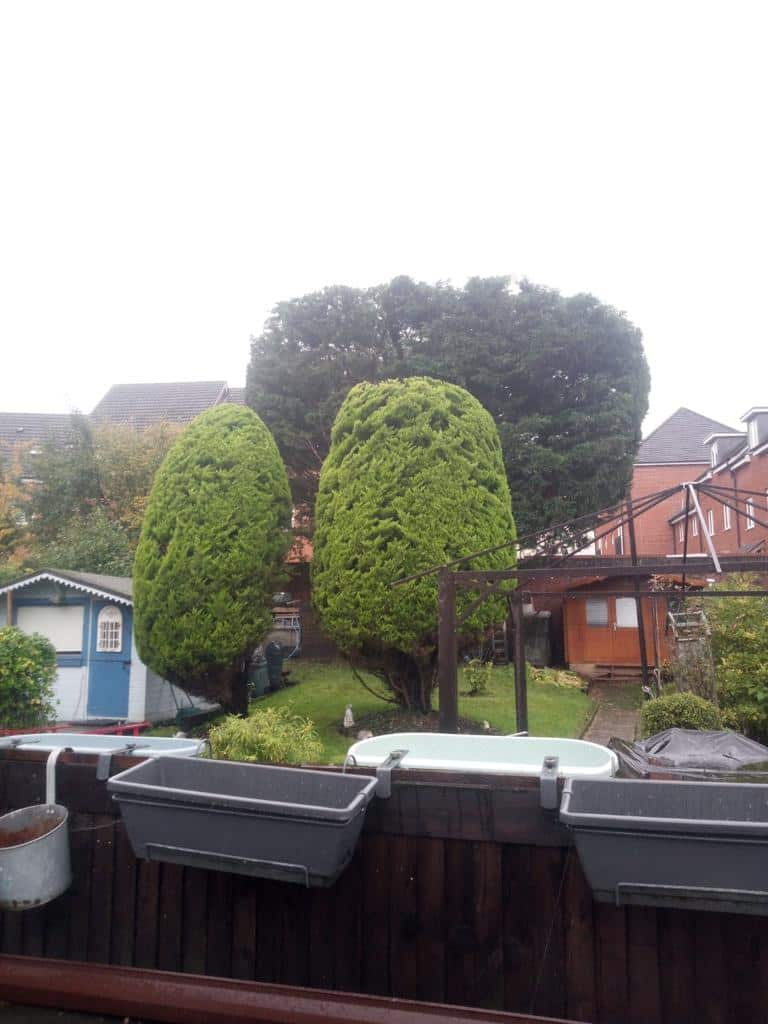
Trees can change gradually, which often makes it difficult to know when professional attention is necessary. A branch that appears slightly different, an increasingly dense crown or an area of dead growth may not seem urgent at first. Equally, discovering a problem does not automatically mean that the tree needs to be removed. Many issues can be managed through carefully selected tree surgery when they are properly assessed.
For property owners in Great Shelford, Cambridge, the most useful time to call a tree surgeon is often before a problem becomes severe. Professional assessment can distinguish between ordinary growth, a tree that would benefit from pruning and a more significant structural concern. Where removal does eventually become the appropriate option, that decision should be based on the condition and circumstances of the individual tree rather than assumption.
When Does a Tree Need Professional Assessment or Tree Surgery?
There is no single point at which every tree requires professional intervention. Species, age, size, structure, location and previous management all influence what is appropriate.
The following signs can help homeowners recognise when a tree deserves closer attention and what type of tree surgery might be considered.
Start With Changes Rather Than Size Alone
A large tree is not necessarily a problematic tree.
Established trees can develop substantial crowns while remaining entirely suitable for their surroundings. Size becomes more relevant when the tree is beginning to conflict with the available space or when other changes appear alongside continued growth.
One of the most useful things a homeowner can notice is therefore change. A new lean, broken branch, declining section or rapidly altering crown can provide more meaningful information than size by itself.
Dead Branches Are Worth Assessing
Trees naturally develop some deadwood, particularly as they mature.
However, substantial dead branches or an increasing amount of deadwood can justify professional attention.
The appropriate response may simply involve selective deadwood removal rather than wider pruning.
A tree surgeon can identify significant dead growth while considering whether the remainder of the crown appears to be developing normally.
Hanging Branches Should Not Be Left Unchecked
A branch does not always fall completely when it fails.
It may crack, become partially detached or remain suspended amongst surrounding branches. Dense foliage can make this difficult to identify from ground level.
Where a hanging or obviously damaged branch is noticed, professional assessment is sensible.
The work can then concentrate on the damaged section while determining whether neighbouring branches have also been affected.
Cracks Around Major Branch Unions Need Closer Attention
The points where substantial branches or stems meet are important parts of a tree’s structure.
Visible cracking or splitting around these areas can indicate that something has changed.
The significance of a crack depends on its location, extent and relationship with the rest of the tree.
It should therefore be professionally assessed rather than assuming either that the tree is immediately unsuitable for retention or that the defect can safely be ignored.
A Newly Developing Lean Can Be Important
Many trees naturally grow at an angle and remain that way for decades.
A long-standing lean is different from a tree that has recently changed position.
If a previously upright tree begins leaning noticeably, particularly when accompanied by movement or changes around the base, professional assessment becomes important.
The tree, root area and surrounding ground need to be considered together before determining what action is appropriate.
Changes Around the Root Area Can Provide Warning Signs
Tree stability begins below ground.
Although much of the root system cannot be seen, visible changes around the base can sometimes provide useful information.
Newly disturbed soil, lifting ground or changes occurring at the same time as a developing lean deserve attention.
Visible surface roots alone do not prove that a tree has a problem, so observations around the base need to be interpreted in the context of the complete tree.
Storm Damage Can Be More Extensive Than It Appears
After poor weather, the most obvious problem may be a fallen branch.
However, other parts of the crown can also have been affected.
Branches may have cracked without completely failing, and previously weak growth may have experienced significant movement.
Where a tree has suffered noticeable storm damage, a professional inspection can establish whether the problem is confined to the obvious branch or whether additional attention is required.
Repeated Branch Failure Deserves Wider Investigation
One broken branch can be an isolated occurrence.
Several substantial failures from the same tree provide a stronger reason for closer assessment.
Rather than repeatedly removing fallen or damaged branches individually, it can be useful to consider the crown as a whole.
A tree surgeon can assess whether the failures share a common structural characteristic or whether other vulnerable branches require attention.
A Declining Section of the Crown Can Be Significant
A tree does not always decline evenly.
One section may produce noticeably less foliage or contain increasing amounts of dead growth while the remainder continues developing.
There can be different reasons for this pattern, and it cannot be reliably diagnosed simply from the appearance of the leaves.
Professional assessment can consider the declining area alongside the trunk, branches and wider crown before determining whether tree surgery is appropriate.
Cavities Do Not Automatically Mean Removal
Hollows and cavities can cause understandable concern.
However, the presence of a cavity does not by itself determine whether a tree should remain or be removed.
Its location, size and the condition of the surrounding structure all matter.
Some established trees continue growing with longstanding cavities. Others may have defects that require closer management.
Professional assessment is therefore particularly valuable before making assumptions based on appearance alone.
Fungal Growth Can Be a Reason to Seek Advice
Fungal growth around a tree can occur for different reasons, including the presence of decaying organic material.
For a homeowner, determining its significance can be difficult.
Where unusual fungal growth appears around the base, trunk or major roots, particularly alongside other changes in the tree, professional assessment can help establish whether further investigation or management is appropriate.
The presence of fungi should be considered as one part of the overall picture rather than a diagnosis on its own.
An Overgrown Tree May Simply Need Crown Management
Not every call to a tree surgeon involves a damaged tree.
Trees can remain healthy while gradually becoming too large for the space available.
Branches may extend further across the garden, the crown may become dominant or surrounding areas may receive considerably less light than previously.
Where appropriate, crown reduction can manage the overall dimensions while retaining the tree.
This can provide a practical alternative to removal when size rather than condition is the main concern.
A Dense Crown May Need a Different Approach
A tree can appear overgrown because its crown has become particularly dense rather than because its overall dimensions are excessive.
These are different problems.
Where suitable, selective pruning or crown thinning may help manage particular areas of congestion while retaining the broader dimensions.
Professional assessment helps avoid applying a substantial reduction when the actual issue lies within the internal crown structure.
Low Branches Can Be Managed Without Reducing the Whole Tree
Sometimes only the lower part of the crown is causing difficulty.
Branches may extend across paths, lawns or other areas where additional clearance would be useful.
Selective pruning or appropriate crown lifting can potentially address this without significantly reducing the remainder of the tree.
This targeted approach demonstrates why identifying the exact problem is important before deciding what type of tree surgery is needed.
Crossing and Damaged Branches Can Often Be Managed Selectively
Branches sometimes grow across one another as the crown develops.
Where they repeatedly rub, become damaged or compete for the same space, selective pruning may be appropriate.
The objective is not to remove every crossing branch.
Instead, the relationship between the affected branches and the wider crown should be considered so that useful growth is retained wherever appropriate.
Poor Previous Pruning May Require Corrective Management
Trees that have been repeatedly cut without a clear management strategy can develop unusual growth patterns.
Dense clusters of shoots, uneven crowns and repeated regrowth around old cutting points can make future maintenance increasingly difficult.
Professional tree surgery may help improve the situation through selective management.
However, years of poor cutting cannot always be corrected during one visit. A gradual approach may be more appropriate where extensive previous pruning has significantly altered the tree.
Rapid Regrowth Can Indicate That the Pruning Strategy Needs Changing
Heavy cutting does not necessarily keep a tree smaller for longer.
Some trees respond by producing vigorous new growth.
If a tree repeatedly becomes dense and overgrown soon after being heavily cut, continuing the same approach can perpetuate the problem.
A tree surgeon can assess whether more selective management would provide a better way of controlling future growth.
Early Assessment Can Provide More Management Options
Waiting until a tree has developed a severe problem can limit the available choices.
Calling a tree surgeon when significant changes first become noticeable allows the condition to be assessed while the issue may still be relatively contained.
This does not mean work will always be required immediately.
In some situations, professional assessment may establish that the tree requires only limited management or observation rather than extensive intervention.
Tree Surgery Should Have a Clear Purpose
Professional tree surgery is not simply about removing as many branches as possible.
Every intervention should address a defined requirement.
This might involve removing deadwood, improving clearance, managing overall dimensions, addressing damaged branches or dealing with specific structural growth.
Clear objectives help avoid unnecessary pruning and allow the work to be matched to the individual tree.
More Pruning Is Not Always Better
Excessive pruning can significantly alter a tree’s crown and influence how it subsequently grows.
The amount of material removed should therefore be proportionate to the objective.
Where one branch is causing a problem, pruning the complete crown may be unnecessary. Similarly, a tree requiring crown reduction should be managed through suitable pruning points rather than simply cut back severely.
Professional judgement is particularly valuable in deciding how much intervention is genuinely beneficial.
When Might Tree Removal Need to Be Considered?
There are situations where retaining a tree may become less appropriate.
The circumstances can vary considerably and need to be assessed individually. Significant structural deterioration, extensive decline or other serious problems affecting the tree may lead to removal being considered.
The important point is that felling should be the result of assessment rather than the automatic response to any defect.
Many tree problems can be addressed without removing the complete tree.
Several Serious Warning Signs Together Matter More Than One Symptom
Tree condition is best understood by considering multiple observations together.
A cavity on its own may have one significance. A cavity accompanied by substantial decline, structural cracking and major branch failure creates a different picture.
Similarly, a leaning tree with no recent movement is different from one that has changed position while the surrounding ground has also become disturbed.
Professional assessment brings these observations together rather than relying on one isolated feature.
Removal Is Not the Same as Routine Tree Management
It is useful to distinguish between managing an established tree and deciding that the complete tree needs removing.
Crown reduction, pruning, deadwood removal and other tree surgery techniques aim to retain and manage the tree.
Felling has a fundamentally different objective.
Where retention remains practical, suitable management may provide the appropriate response. Removal should be considered separately where the tree’s actual condition or circumstances justify it.
Stump Grinding Can Be Considered After Tree Removal
Where a tree is eventually felled, the stump normally remains unless additional work is undertaken.
Stump grinding is a separate tree service used to reduce an unwanted stump below the surrounding surface.
This can be useful where the remaining stump would interfere with how the garden is intended to be used afterwards.
Tree felling and stump grinding should therefore be understood as separate stages rather than assuming removal of the standing tree automatically deals with everything below it.
Professional Assessment Helps Avoid Unnecessary Tree Removal
One of the most valuable reasons to contact a tree surgeon is to understand what level of intervention is actually required.
At Great Shelford Tree Surgeons, we assess trees in Great Shelford, Cambridge by considering their condition, structure, crown development, visible root area, previous management and relationship with the surrounding garden.
A tree that needs selective pruning should not automatically be treated as though it requires major reduction. Likewise, an overgrown tree should not be recommended for felling simply because it has become large.
The objective is to identify an appropriate tree surgery approach based on the individual tree and the problem that needs resolving.
Conclusion
You do not need to wait until a tree has suffered major failure before calling a tree surgeon. Dead or hanging branches, new cracks, repeated branch failure, a developing lean, changes around the root area, declining sections and noticeable alterations following poor weather can all provide sensible reasons to arrange professional assessment.
Equally, tree surgeons are not only required when trees are damaged. An established tree that has become excessively large, dense or difficult to accommodate may benefit from carefully selected pruning or crown management.
Tree removal sits at the more extensive end of this process and should not be assumed from the first warning sign. Professional assessment can establish whether the tree can be appropriately managed and retained or whether its condition genuinely requires a different approach.
If you have noticed changes in a tree in Great Shelford, Cambridge and are unsure what level of attention it requires, contact Great Shelford Tree Surgeons. We can assess the tree and recommend an appropriate course of action based on its actual condition and management needs.
Call us on: 01223 912 289
Click here to find out more about Great Shelford Tree Surgeons
Click here to complete our contact form and see how we can help with your tree care needs.