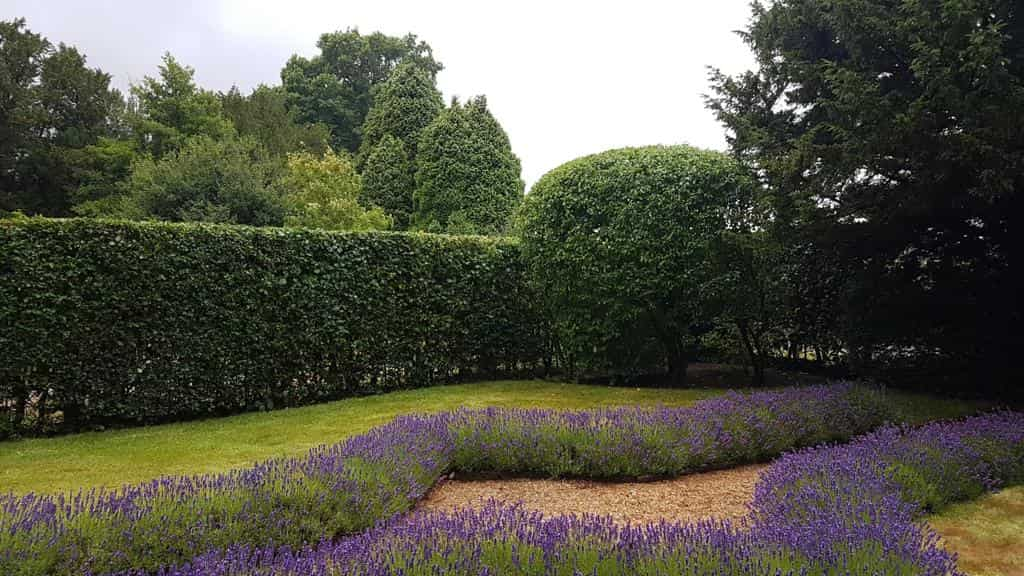
A hedge can provide privacy, structure and an attractive natural boundary, but unchecked growth may gradually reduce the usable space and daylight within a garden. Long side shoots can extend across lawns, paths and planting areas, while an excessively tall hedge may cast shade over a considerable part of the property.
Professional hedge cutting restores proportion without removing the character or purpose of the hedge. By assessing its species, condition and growth pattern, a tree surgeon can create a more manageable boundary that allows the wider garden to feel lighter, tidier and more spacious.
Creating a Brighter and More Usable Garden
The greatest improvement usually comes from cutting the hedge to suit the garden rather than trimming only its most obvious outer growth. Width, height, shape and density all influence how much light and space the hedge occupies.
Reducing Excessive Hedge Width
A mature hedge can become surprisingly wide when it is not cut regularly. New shoots extend beyond the original boundary each growing season, gradually covering planting beds, narrowing paths and taking space from the lawn.
Professional cutting can remove this excess growth and restore a cleaner, more defined hedge line. This may help to:
- Recover space beside paths and driveways
- Make narrow garden areas easier to use
- Prevent branches from overhanging seating areas
- Reveal planting beds that have become obscured
- Improve access for routine garden maintenance
- Create a clearer division between different areas
The amount that can be removed safely will depend on the hedge species and the position of healthy growth. A careful assessment helps avoid cutting too deeply into areas that may not regenerate well.
Controlling Height to Improve Daylight
An overgrown hedge can block sunlight from reaching lawns, flower beds and windows. This is especially noticeable when the hedge has developed an uneven top containing long, upright shoots.
Reducing the height to a more appropriate level can allow more daylight to enter the garden. The result may be particularly beneficial for shaded lawns and plants that have struggled beneath a dense canopy.
Height reduction must be planned rather than approached as an aggressive cut. The finished hedge should retain sufficient healthy foliage and an even form that suits its natural growth habit.
Removing Overhanging and Unbalanced Growth
Hedges rarely grow at the same rate on every side. Sections exposed to more light may develop quickly, while shaded areas remain thinner. Nearby trees, buildings and previous cutting can also produce an uneven shape.
Professional hedge cutting addresses these differences rather than applying the same amount of reduction everywhere. Removing overhanging branches and correcting protruding sections creates a more balanced boundary while releasing space where it is needed most.
This tailored approach is particularly useful when a hedge is obstructing one part of the garden but remains suitable elsewhere.
Improving Light Around Other Plants
Dense hedge growth competes with nearby planting for both light and physical space. Shrubs and flowers positioned alongside an overgrown hedge may become weak, lean towards the available light or stop flowering effectively.
Restoring the hedge to a manageable size can improve growing conditions around its base and along neighbouring borders. More open space also makes it easier to maintain plants, remove weeds and monitor soil conditions.
Professional cutting cannot change every source of shade, but it can prevent unnecessary hedge growth from dominating the planting scheme.
Making Small Gardens Feel Larger
Visual space is just as important as physical space. A hedge with an uneven face, heavy overhangs and an irregular top can make a garden feel enclosed, even when its actual dimensions have not changed.
A neatly shaped hedge creates clearer lines and reduces visual clutter. When paths, lawns and borders are no longer concealed by foliage, the garden often feels more open and organised.
The objective is not always to make the hedge as small as possible. A well-proportioned hedge can still provide privacy while contributing to a greater sense of depth and order.
Encouraging Denser, More Controlled Growth
Regular, correctly timed cutting encourages many hedge species to produce compact growth rather than long, untidy shoots. This makes the boundary easier to manage and helps prevent it from rapidly reclaiming cleared space.
A professional maintenance plan may include:
- Shaping the sides to create an even profile
- Controlling vigorous shoots before they become woody
- Removing dead or damaged sections
- Maintaining a consistent top line
- Checking thin or stressed areas
- Adjusting the cutting method to the hedge species
Consistent maintenance is generally more effective than allowing the hedge to become severely overgrown before reducing it again.
Why Professional Technique Matters
Cutting an established hedge too hard or unevenly may leave bare patches, distorted growth or an unstable shape. The appropriate method depends on the species, maturity and condition of the hedge, as well as the amount of live foliage remaining.
A professional tree surgeon can assess how much growth should be removed and where cuts should be made. Suitable equipment also allows tall, wide or difficult-to-access hedges to be shaped accurately.
The finished result should improve light and space while preserving the hedge as a healthy, functional feature.
Signs Your Hedge Is Taking Over the Garden
Professional attention may be worthwhile if:
- Paths or entrances have become noticeably narrower
- The hedge overhangs lawns, patios or planting beds
- Rooms close to the hedge receive less daylight
- Plants beneath it are struggling
- The top has become tall and irregular
- Previous trimming no longer produces a neat shape
- Access to parts of the garden is restricted
- Maintaining it has become difficult
These signs suggest that the hedge may need more than a light surface trim.
Conclusion
Professional hedge cutting can improve garden light and space by controlling excessive height, reducing overhanging growth and restoring a defined boundary. The garden becomes easier to use and maintain, while lawns, borders and nearby rooms may benefit from improved daylight.
The best results come from shaping the hedge according to its species and condition rather than removing growth indiscriminately. If an overgrown hedge is making your garden feel enclosed, Great Shelford Tree Surgeons provides professional hedge cutting in Great Shelford, Cambridge. Contact the team to arrange an assessment and discuss a suitable approach for your hedge.
Call us on: 01223 912 289
Click here to find out more about Great Shelford Tree Surgeons
Click here to complete our contact form and see how we can help with your tree care needs.