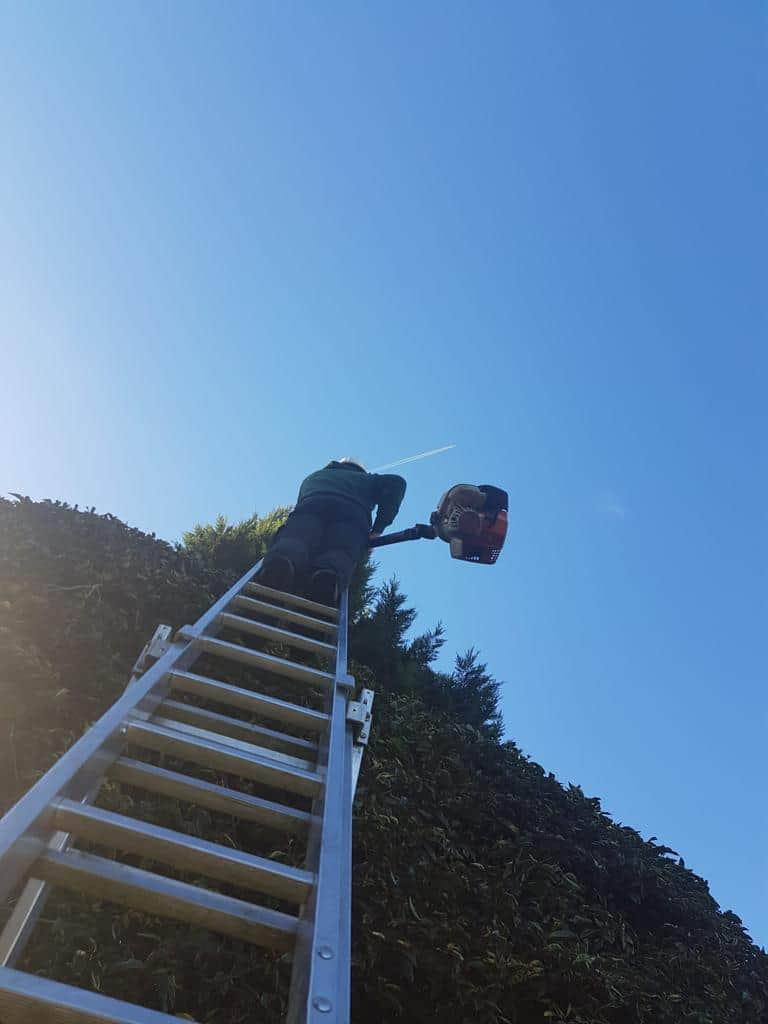
Trees can change gradually, which means developing problems are not always immediately noticeable. A damaged branch may remain in place for some time, while an overgrown crown can slowly spread towards buildings, paths and neighbouring parts of the garden.
Addressing these issues early gives a tree surgeon more options. Localised pruning, deadwood removal or crown management may be sufficient before the problem becomes more extensive. Delaying an assessment can allow defects to worsen and make the tree harder to manage safely.
Why Should Damaged or Overgrown Trees Be Assessed Promptly?
Early attention is not about removing every imperfect branch. It is about identifying changes that could affect the tree’s condition, structure or surroundings and deciding whether professional work is needed.
Damaged Branches Can Become Less Stable
Branches may be weakened by strong winds, impact, decay or previous poor-quality cuts. Some remain partly attached even after splitting, making their condition difficult to judge from ground level.
A branch does not need to fall immediately to present a concern. Movement in later winds can enlarge a split or weaken the remaining attachment. Early inspection allows damaged sections to be identified before they deteriorate further.
Deadwood May Fall Without Much Warning
Dead branches no longer have the flexibility or strength of healthy wood. They can become brittle and break during windy conditions, although failure may also occur on a calm day.
Deadwood above paths, driveways, seating areas and frequently used parts of a garden deserves particular attention. Professional removal can target the affected branches while retaining healthy parts of the crown.
Overgrown Branches Can Reduce Clearance
Branches may gradually extend over roofs, sheds, fences, paths and parking areas. They can obstruct access, brush against structures or hang too low for comfortable movement beneath the tree.
Selective pruning can restore practical clearance without removing more growth than necessary. Acting early is usually preferable to waiting until large limbs have occupied the available space.
Dense Growth Can Conceal Developing Defects
An overgrown crown can make it difficult to see crossing branches, damaged unions and dead sections. Excessive growth may also obscure changes in the trunk or main framework.
A professional assessment looks beyond the outer foliage to consider the condition and arrangement of the branches. Appropriate pruning can improve the crown’s structure and make future monitoring more straightforward.
Small Structural Problems May Become More Significant
A minor split, cavity or weak branch junction may remain stable, but it can also change as the tree grows and responds to wind. Additional weight from new growth places greater force on existing unions.
Early assessment does not automatically mean major work is required. In some cases, monitoring may be appropriate. Where intervention is needed, selective pruning may reduce strain on a vulnerable section before the defect becomes more serious.
Excessive Growth Can Affect the Tree’s Balance
Trees naturally develop in response to light and available space. However, uneven growth may become pronounced where one side has been shaded, previously damaged or badly pruned.
A heavily extended limb can place additional leverage on its attachment point. Crown reduction or selective shortening may help manage this imbalance, but cuts must be positioned carefully to preserve the tree’s natural form and future growth.
Early Work Can Preserve More of the Tree
When a problem is localised, it may be possible to remove only the damaged branch or reduce a particular section. If deterioration spreads, more extensive work may eventually be needed.
Prompt attention therefore supports a more measured approach. The aim is to retain healthy growth wherever practical while dealing with the specific feature causing concern.
Overgrown Trees Can Affect Light and Garden Use
A large, unmanaged crown may cast extensive shade across lawns, planting areas and seating spaces. Low or spreading branches can also reduce the usable area beneath the tree.
Suitable pruning can improve clearance and light distribution while retaining the tree as an important garden feature. The correct method depends on the species, age, condition and desired outcome.
Poorly Timed DIY Cutting Can Create New Problems
Removing large branches without understanding branch structure can leave unnecessary wounds, unbalanced growth or weak regrowth. Cutting too much from the crown at once may also place the tree under avoidable stress.
Professional tree surgery uses selective cuts made at appropriate positions. This helps manage the original problem without creating further defects that require correction later.
Warning Signs That Deserve Attention
Property owners should arrange an assessment if they notice:
- Hanging, split or broken branches
- Dead sections within the crown
- Branches touching buildings or blocking access
- New cracks in the trunk or major unions
- Sudden leaning or changes in the surrounding ground
- Fungal growth around the trunk or base
- Significant dieback or unusual thinning
- Dense growth hiding the main branch structure
- A crown that has become heavily one-sided
- Repeated branch loss during windy weather
These signs do not always mean a tree must be removed, but they should not be dismissed without proper inspection.
How Professional Tree Surgery Can Help
The appropriate response may involve deadwood removal, tree pruning, crown thinning, crown reduction or the removal of specific damaged branches. Tree felling is generally considered when the tree cannot be retained safely or when other management options are unsuitable.
A professional tree surgeon can identify the work required and avoid removing healthy growth unnecessarily. This creates a clearer plan based on the tree’s condition rather than its size alone.
Conclusion
Addressing damaged or overgrown trees early can prevent defects from worsening, restore useful clearance and preserve more healthy growth. It also allows tree work to remain targeted rather than waiting until the problem requires a more extensive response.
If you are concerned about a tree in Great Shelford, Cambridge, contact Great Shelford Tree Surgeons to arrange a professional assessment. Our team can identify the appropriate work and provide clear guidance without recommending unnecessary intervention.
Call us on: 01223 912 289
Click here to find out more about Great Shelford Tree Surgeons
Click here to complete our contact form and see how we can help with your tree care needs.