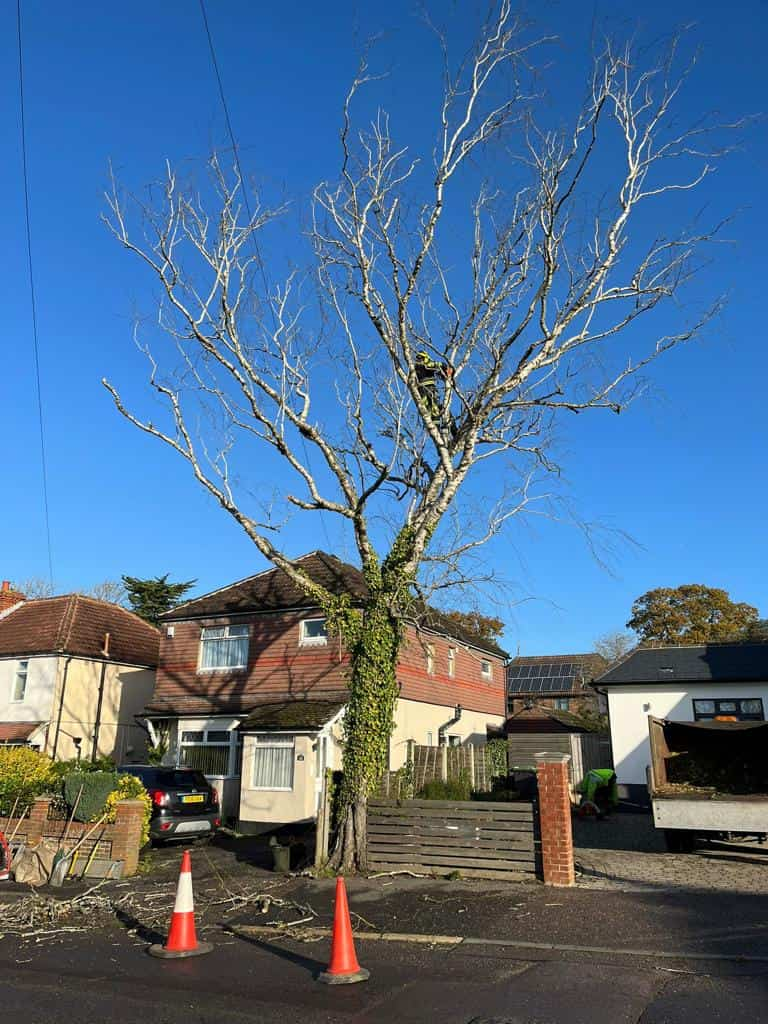
Trees are a valuable feature of many properties in Great Shelford, Cambridge, providing structure, shade, and character to gardens and landscapes. In most cases, professional pruning is enough to manage growth and maintain health. However, there are situations where pruning alone is no longer sufficient, and tree felling becomes the safer and more responsible option. Understanding the signs that indicate felling may be necessary helps property owners make informed decisions.
At Great Shelford Tree Surgeons, assessments focus on tree health, structural integrity, and safety to determine whether pruning can still deliver long-term benefits or if removal is the more appropriate solution.
When Pruning Is No Longer Effective
Pruning is designed to improve tree health and structure, but it has limitations.
Extensive internal decay
If a tree has significant internal rot, especially within the main trunk or major limbs, pruning will not restore structural strength. Decay weakens the tree from the inside, increasing the risk of failure even if the outer growth appears healthy.
Large dead sections within the canopy
Isolated dead branches can often be removed through pruning. However, when large portions of the canopy are dead or declining, it suggests the tree is no longer able to sustain healthy growth. In these cases, pruning may only provide a short-term improvement.
Structural Instability and Safety Concerns
Safety is one of the primary reasons tree felling is sometimes required.
Visible leaning or ground movement
A noticeable lean, particularly if it has developed recently, can indicate root instability or soil movement. If the root system is compromised, pruning will not correct the underlying issue, making felling the safer option.
Cracks or splits in the trunk
Vertical cracks or splits in the main stem are serious warning signs. These defects can worsen under wind stress, and pruning cannot resolve the structural weakness they create.
Root damage or failure
Roots are critical to a tree’s stability. Damage caused by construction work, soil compaction, or decay can significantly reduce anchorage. When roots are compromised, felling may be necessary to prevent unexpected failure.
Decline in Overall Tree Health
Some trees reach a point where recovery is unlikely.
Persistent disease or infestation
When disease or pest damage affects large areas of the tree and continues despite management efforts, pruning may no longer be effective. In such cases, removal helps prevent further deterioration and potential impact on nearby vegetation.
Poor regrowth after previous pruning
Healthy trees typically respond well to pruning. Weak, sparse, or uneven regrowth can indicate declining vitality, suggesting the tree may not recover sufficiently to remain safe or stable.
Location and Surrounding Environment
The position of a tree plays a significant role in deciding between pruning and felling.
Proximity to buildings and access areas
Trees located close to homes, driveways, or footpaths require a higher level of safety assurance. If structural defects pose a risk to surrounding areas, felling may be the most responsible course of action.
Limited space for corrective growth
In confined spaces, repeated pruning may not adequately control growth or reduce risk. Felling can sometimes be the only practical way to address ongoing safety concerns.
The Importance of Professional Assessment
Deciding whether to prune or fell a tree requires careful evaluation.
Objective evaluation of risks
Professional tree surgeons assess the tree’s condition, stability, and environment to determine whether it can be safely retained or if removal is the better long-term solution.
Responsible decision-making
Tree felling is never undertaken lightly. It is recommended only when pruning cannot adequately address health, safety, or structural concerns.
Conclusion
While pruning is often sufficient for managing trees, there are clear signs that indicate when felling is the safer and more appropriate option. Extensive decay, structural instability, severe health decline, and environmental risks all suggest that pruning alone may no longer be effective.
For property owners in Great Shelford, Cambridge, professional assessment is essential when deciding between pruning and felling. Great Shelford Tree Surgeons provide expert evaluations and responsible tree surgery services focused on safety, long-term outcomes, and the well-being of your landscape. If you are concerned about the condition of a tree on your property, our team is available to offer clear advice and professional guidance tailored to your situation.
Call us on: 01223 912 289
Click here to find out more about Great Shelford Tree Surgeons
Click here to complete our contact form and see how we can help with your tree care needs.